Printed packaging is changing quickly. Brands now demand sharper graphics, shorter production runs, and stronger environmental performance. So, what are the latest innovations in printed packaging? This question matters to food, cosmetics, healthcare, and e-commerce businesses facing crowded shelves and stricter sustainability expectations.
Lynn Dornblaser, Director of Innovation and Insights at Mintel, has said, “Packaging is an important communication tool for brands.” Her observation remains highly relevant. Digital inkjet and toner printing now support economical personalization, seasonal artwork, and regional campaigns. Variable-data printing can add unique codes, names, or traceable batch information to each pack. It feels more personal.
New water-based and low-migration inks are also improving printed packaging for sensitive applications. High-definition flexography creates finer images with less ink waste. Digital embellishment adds foil effects, raised textures, and matte contrasts without traditional plates. These details can make a small carton feel surprisingly premium.
Smart printed packaging is developing too. Printed QR codes can connect a carton to recycling instructions, product stories, or authenticity checks. Conductive inks may support simple sensors and interactive labels. However, clever features are not automatically useful. Some codes fail after condensation, scratches, or poor scanning conditions.
Material choices require equal attention. Recyclable mono-material films, lighter paperboard, and fiber-based barrier coatings are attracting investment. Yet every solution has trade-offs. Barrier strength, ink removal, durability, and local recycling systems must be tested together.
This article examines ten notable innovations shaping printed packaging today. Some are genuinely practical. Others still need better evidence, clearer standards, and broader infrastructure before becoming mainstream.
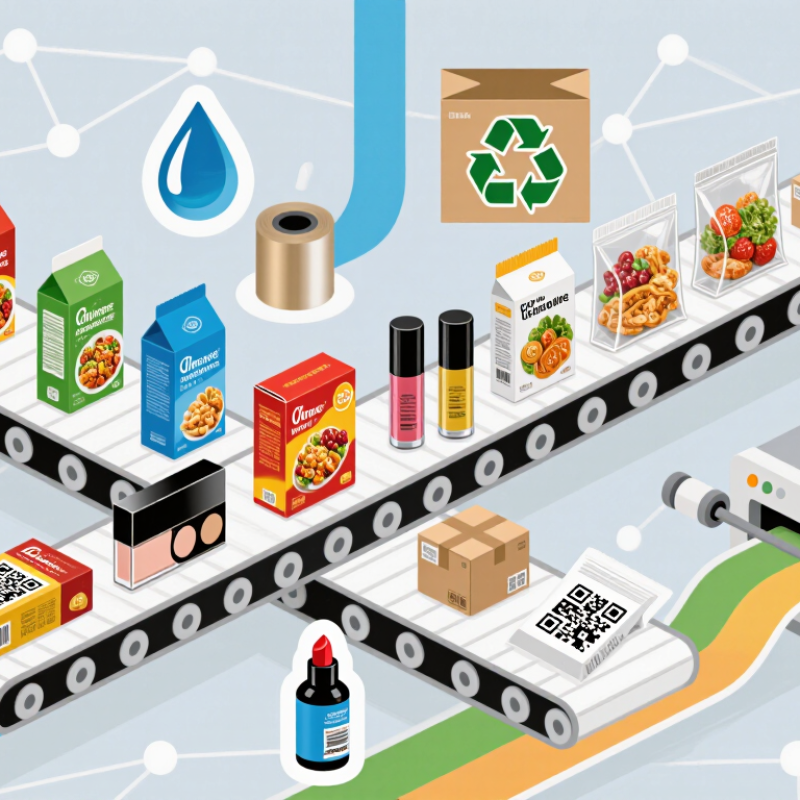
Defining the Latest Printed Packaging Innovations in China
China’s latest printed packaging innovations are not defined by decoration alone. They combine sharper graphics, lower material use, faster version changes, and measurable product protection. The category remains fuzzy. A printed box becomes innovative when its design solves a real supply-chain problem.
The China Packaging Federation reported approximately RMB1.54 trillion in packaging-industry revenue in 2023. That scale encourages practical experimentation. Digital printing now supports short runs, regional artwork, variable codes, and rapid seasonal updates without traditional plate costs. Smithers’ The Future of Digital Print for Packaging to 2028 forecasts strong global growth for digital packaging print, reflecting this shift toward flexible production. A useful test is simple:
can the package change quickly without creating excess stock?
Sustainability is another defining measure. The World Packaging Organisation’s Global Packaging Trends report identifies recyclability, material reduction, and clearer recovery systems as major industry priorities. In Chinese factories, this can mean water-based inks, thinner paperboard, mono-material films, and scannable recycling guidance. Not every QR code adds value. A code should provide traceability, instructions, or verified product information. Printed electronics and tactile finishes also attract attention, but they may complicate recycling or increase cost. The trade-off deserves more honesty. Innovation should be judged beside energy use, print waste, abrasion resistance, and consumer behavior, not only on a showroom sample.
How China’s Printed Packaging Technologies Are Evaluated
China Top 10 Latest Printed Packaging Innovations?
Printed packaging in China is increasingly evaluated through evidence, not visual novelty. Smithers’ The Future of Digital Print for Packaging to 2029 projects the global digital packaging print market will approach US$37 billion by 2029. This growth raises a practical question: can new technologies deliver stable quality at commercial speed?
Evaluation usually begins with color accuracy, registration, drying performance, and surface resistance. A production team may compare a printed pouch under warehouse lighting, then rub it against a cardboard divider. Color difference is measured with Delta E, while seal strength and barrier performance are tested under heat and humidity. These details matter more than a bright sample sheet.
Sustainability requires harder evidence. The Global Commitment 2023 Progress Report from the Ellen MacArthur Foundation stresses the need for recyclable packaging design and material reduction. China’s printed solutions should therefore be assessed by ink migration control, substrate compatibility, recyclability, and energy use per production run. Digital printing can reduce setup waste for short batches, but its environmental benefit is not automatic. No scorecard is perfect. Some suppliers still provide impressive laboratory results without enough long-term factory data. Independent testing and repeat trials remain essential. A packaging innovation is credible only when it survives transport, retail handling, and real consumer use.
Ten Breakthrough Innovations Shaping Printed Packaging
China Top 10 Latest Printed Packaging Innovations
Ten breakthrough innovations are reshaping printed packaging across China. They include digital inkjet printing, water-based inks, LED-UV curing, variable-data printing, smart QR and NFC features, recycled paperboard, mono-material films, lightweight structures, tactile coatings, and AI-powered inspection. Digital presses now support shorter runs and faster artwork changes. Smithers projects the global digital packaging print market will reach about US$36.9 billion by 2028. That growth reflects practical demand, not only technology excitement.
Water-based inks reduce solvent exposure and improve workplace conditions. LED-UV systems can lower energy use, although curing performance still depends on substrate quality. Recycled fibers create visible texture and occasional color variation. That imperfection can feel honest. Mono-material films simplify recycling, but barrier performance remains difficult for oily or oxygen-sensitive products. These trade-offs deserve more attention.
Variable data can print localized graphics, serial codes, and campaign messages on every pack. QR-linked content adds traceability and usage guidance without extra paper inserts. AI vision systems inspect tiny defects at production speed, while tactile varnishes create raised lines that guide touch. According to Smithers, sustainability-driven packaging development will continue gaining investment through 2028, especially in recyclable structures and lower-impact materials. Yet “recyclable” claims can become vague without collection data, testing, and clear disposal instructions. The industry is advancing quickly, but not every attractive innovation solves a real packaging problem.
Materials, Printing Processes, and Smart Packaging Features
China’s latest printed packaging work is moving beyond decoration toward measurable performance. Recyclable mono-material films, molded fiber, and paper-based laminates are receiving more attention. Some packages use thin water-based coatings to improve grease and moisture resistance. The trade-off is real. Better barriers can complicate recycling.
Digital inkjet printing supports short runs, regional artwork, and rapid design changes. Flexographic printing remains efficient for larger volumes, while hybrid presses combine variable data with stable color control. Low-migration inks are important for food-contact applications, but printers still need documented curing and migration tests. A bright sample does not prove safe production.
Smart features are becoming more practical. Printed QR codes can connect packaging with instructions, batch information, and recycling guidance. NFC labels may support product authentication and user interaction. Time-temperature indicators can reveal whether sensitive goods faced excessive heat. Printed conductive inks also enable simple sensors, although durability can suffer after folding, rubbing, or condensation.
Factory checks should include scuffing, barcode readability, seal strength, and storage aging. One failed trial taught a useful lesson: a sensor is pointless if workers cannot scan it. Another problem is data privacy, which requires careful system design. These innovations look promising, but performance claims need independent testing and clearer end-of-life instructions. Some prototypes still feel smarter than they actually are.
China’s Top 10 Latest Printed Packaging Innovations
Materials, printing processes, and smart packaging features
The chart maps the core role of each innovation across three technology dimensions. A value of 1 means that the dimension is a defining part of the innovation; 0 means it is not the primary function. The comparison covers widely used packaging technologies rather than company or brand performance.
Industry Applications and Emerging Development Trends
China’s Top 10 Latest Printed Packaging Innovations: Industry Applications and Emerging Development Trends
China’s printed packaging sector is shifting from decoration toward measurable performance. Current innovations include digital variable printing, water-based inks, recyclable mono-material films, smart labels, tactile coatings, and lightweight paper structures. QR-linked packaging can provide batch information, recycling guidance, and product education. It also creates data risks.
Food and beverage producers use short-run digital printing for regional launches and seasonal designs. Pharmaceutical packaging increasingly applies microtext, invisible markers, and serialized codes for traceability.
E-commerce uses printed protective cartons with optimized dimensions, reducing empty space and transport volume. Retail packaging adds matte textures, raised details, and low-migration inks for stronger shelf communication.
Smithers’ 2024 market analysis forecasts strong growth in digitally printed packaging through 2028, driven by customization and shorter production cycles. The China Packaging Federation has also reported China’s packaging industry revenue at above 1.9 trillion yuan in recent years, showing the scale of this transition.
Sustainability remains complicated. Recyclable structures may lose barrier performance, while compostable materials often need controlled facilities. The Ellen MacArthur Foundation stresses that packaging redesign must support reuse and recycling systems, not only material substitution. Good intentions are insufficient.
Manufacturers are testing AI-assisted artwork inspection, cloud-based color management, digital twins, and automated defect detection. These tools reduce setup waste, but skilled operators remain essential. A small color shift can still damage consumer trust. Data security, ink migration, recycling compatibility, and disposal behavior require more practical testing across China’s diverse regional systems.
FAQS
Innovation means solving a supply-chain problem, not adding decoration. A package may reduce material use, change artwork quickly, or protect products better.
Digital printing supports short runs, regional artwork, variable codes, and rapid seasonal updates. It can reduce setup waste and avoid traditional plate costs. Not always.
Teams should check color accuracy, registration, drying, scuff resistance, and barcode readability. They may rub a pouch against a cardboard divider under warehouse lighting. Laboratory results alone are insufficient.
Recyclable mono-material films, molded fiber, thinner paperboard, and paper-based laminates are becoming more common. Water-based coatings can improve grease and moisture resistance. The trade-off is real.
No. Digital printing may reduce short-run waste, but energy use and material recovery still matter. Thinner barriers can also weaken protection or complicate recycling. The answer needs evidence.
They can provide instructions, batch information, recycling guidance, or product interaction. A QR code should offer useful information, not decoration alone. Some codes add little value.
Time-temperature indicators can show whether sensitive goods experienced excessive heat. Printed conductive inks may support simple sensors. Durability can decline after folding, rubbing, or condensation.
Producers should document curing conditions, migration testing, substrate compatibility, and ink performance. A bright printed sample does not prove safe production. Testing must continue.
Some prototypes appear smarter than they perform in factories. Sensors may fail when workers cannot scan them. Long-term transport, storage, and consumer-use data are sometimes missing.
Request repeat-trial results, independent testing, recycling instructions, seal-strength data, and storage-aging evidence. Check performance after heat, humidity, rubbing, and transport. I would ask for more factory data.
Conclusion
This article explores what are the latest innovations in printed packaging and how China is advancing this rapidly changing field. It defines innovation through improvements in sustainability, print quality, production efficiency, functionality, customization, and consumer interaction. It also explains how printed packaging technologies can be evaluated by considering material performance, energy use, recyclability, cost, manufacturing flexibility, safety, and market suitability.
The article presents ten breakthrough innovations, including recyclable and bio-based materials, water-based inks, digital and hybrid printing, lightweight structures, tactile finishes, variable-data printing, intelligent labels, interactive codes, anti-counterfeit features, and packaging designed for easier reuse or recycling. It connects these developments with applications in food, beverages, healthcare, personal care, logistics, and retail. Finally, it discusses emerging trends such as automation, data-driven production, connected packaging, low-carbon manufacturing, and more personalized solutions that balance visual appeal with environmental responsibility.

 Amnet Packaging